Saturday, May 10, 2008

Squids — In — Spaaaaaace!

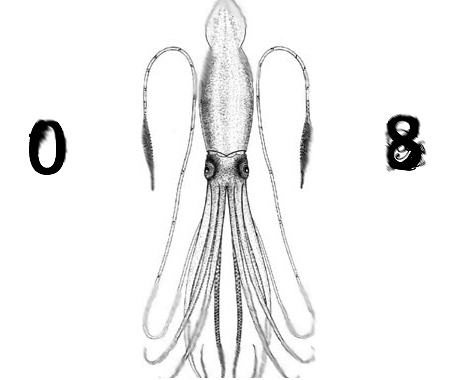
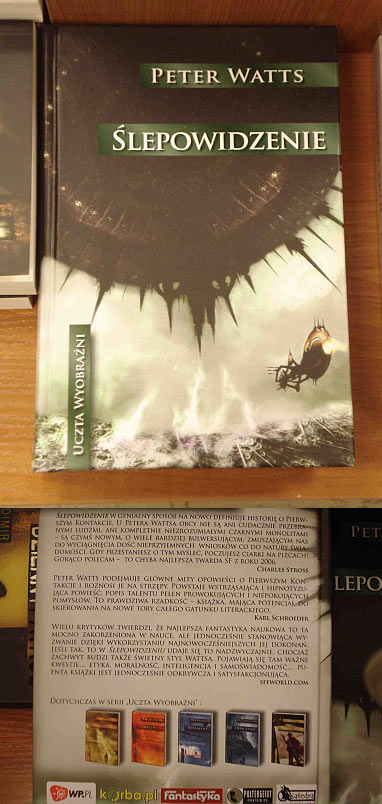
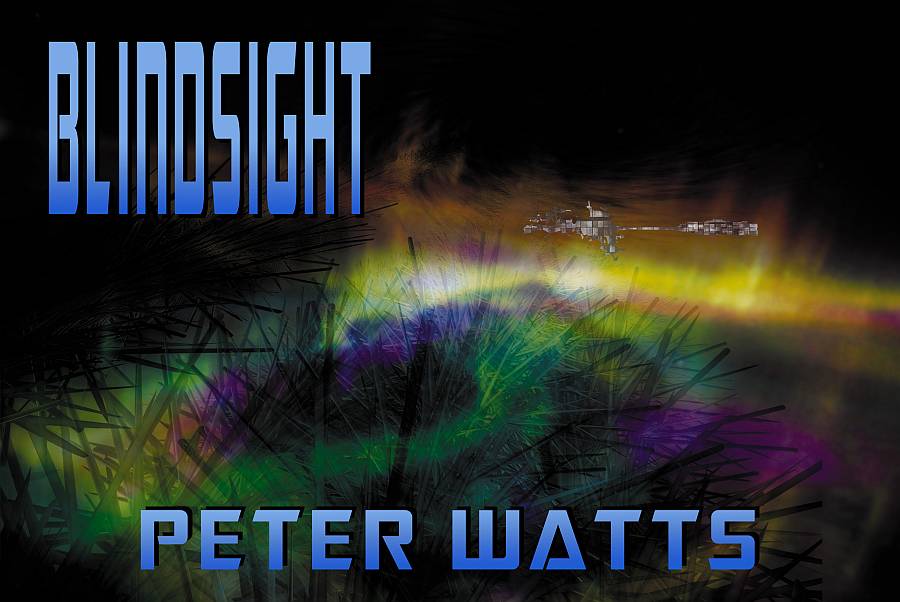
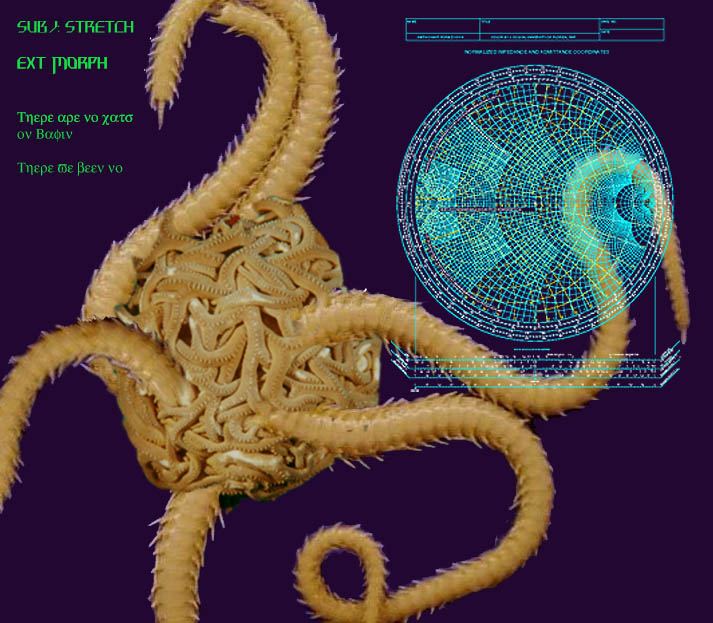
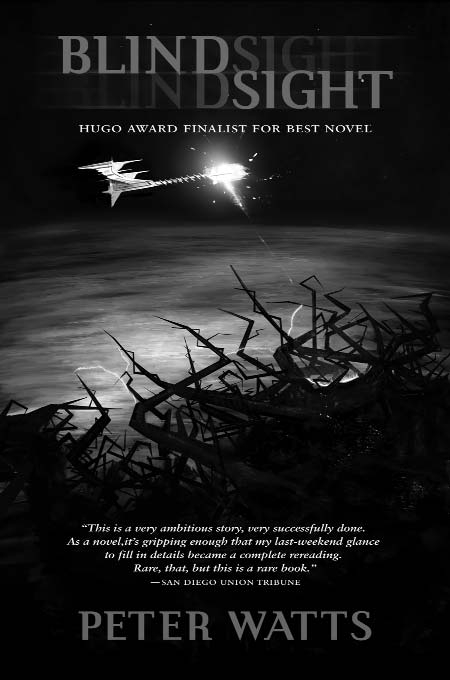
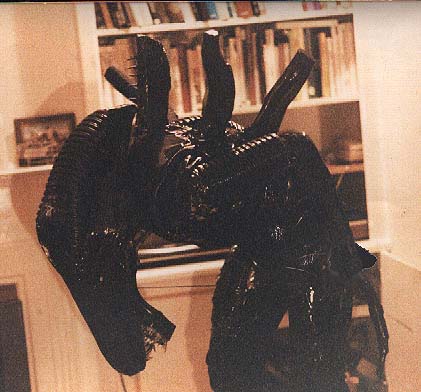
From the Cyrillic side of the planet, the cover art for the Russian edition of Blindsight:


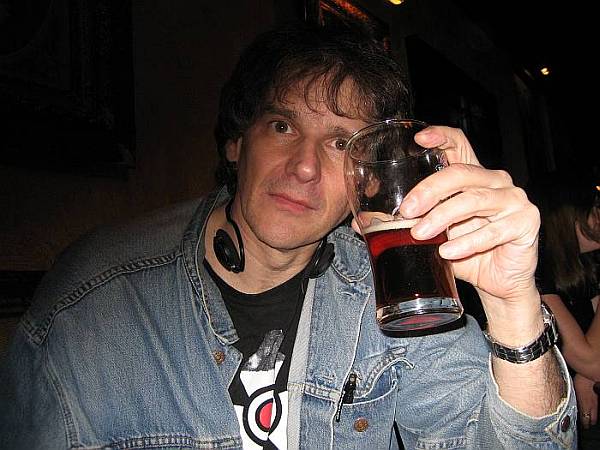
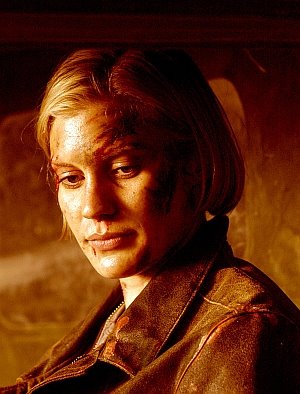
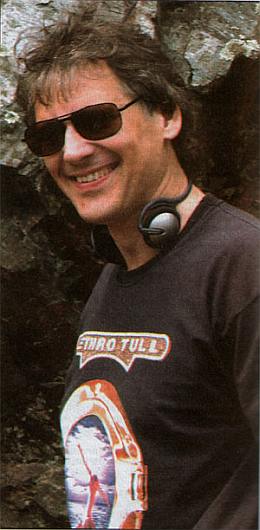
Yes, that is me. I don't know if I'm supposed to be Sarasti, or Keeton, or just the author looming omnisciently over his creation. (My contact at Arabesque tells me that the incorporation of author photos into cover art might be an ongoing element of their sf line). But I think it's kind of cool. Even if those two cratered marbles at center-right don't actually appear in the novel anywhere.

I don't suppose any of you read Russian?

Labels:

Wednesday, May 7, 2008

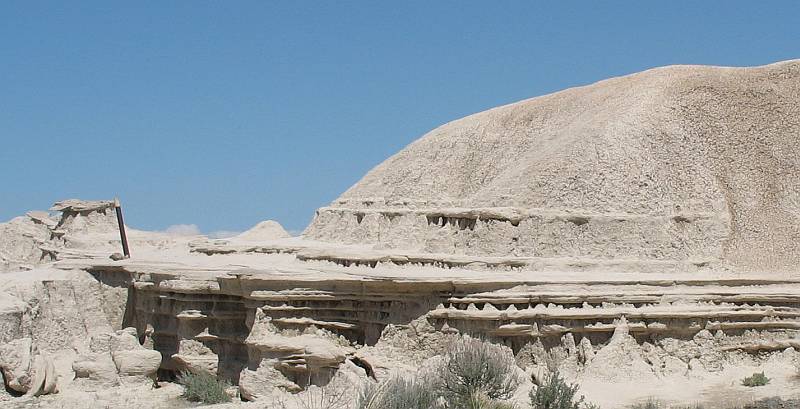
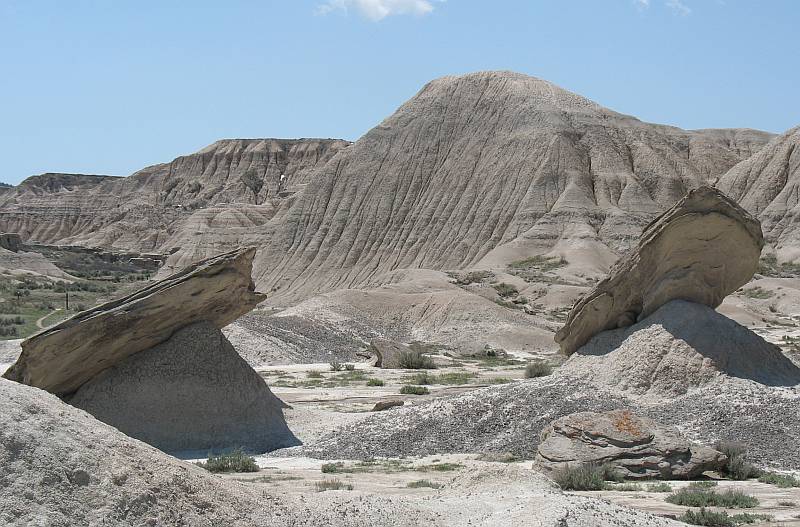
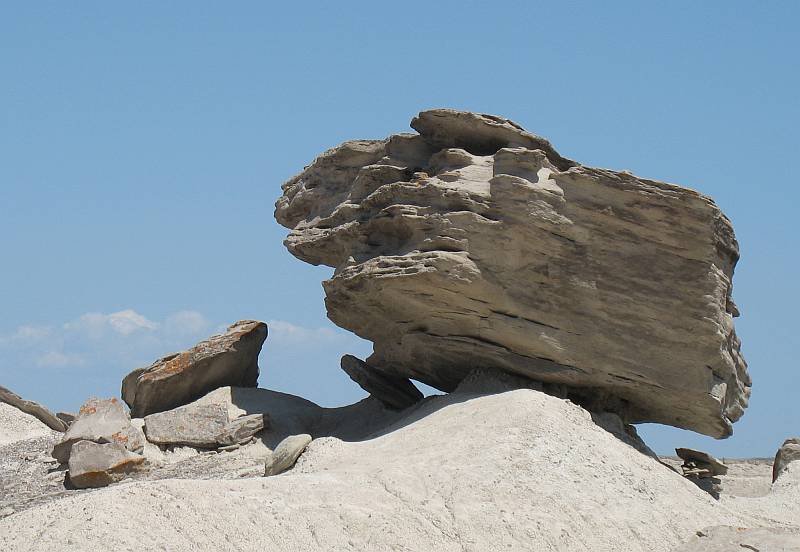
The Brown Lands...

...Just outside Mordor.


So. Where am I now?

(Lars, if you're out there, I rescued a box turtle in your honour the other day. To commemorate, I carved your name into his plastron.)

Labels:

Saturday, May 3, 2008

Freebies

So, the word is out on the subject of the revamped Starship Sofa. My reading of "Repeating the Past" is embedded near the end of their recent podcast; also, the press release reports that I'll be doing a "monthly" science-"fact" podcast called Reality, ReMastered. I can confirm this, sort of, although the monthliness may be a bit iffy. I'm working on the first one now, and will repeat as time and inspiration allow.

(Oh, wait a second. I'm listening to that audio feed even now, as it trickles down the teensy one-bar pipe's worth of bandwidth I can squeeze through the walls of my remote cabin — I love these guys' accents, and whoever they've got reading "Likely Lad" just rules — but pretty much the first thing they say is that it is not a podcast any more, but is, rather, an "audio science-fiction magazine". I stand corrected, if a wee bit confused as to the difference.)

Closer to home, Tor has asked for (and received) permission to release Starfish as a free e-book for a two-week period, as part of ongoing promotion for their new website/online community. They've already done this with novels from a bunch of other authors including Karl Schroeder, David Drake, and the mighty John Scalzi, but I'd go out on a limb and state that my own involvement has a much higher irony quotient. Tor did, after all, respond to my request for a Creative Commons option in the Blindsight contract by trying to insert a clause that would have forbidden me from even posting excerpts of longer than 1,500 words on my own damn website. And Starfish is such a good candidate for a promotional free e-text release, since you can't find one of those anywhere else on the planet.

Glad they're coming around, though.

Labels:

Friday, May 2, 2008

Ultima Thule, That's Where.

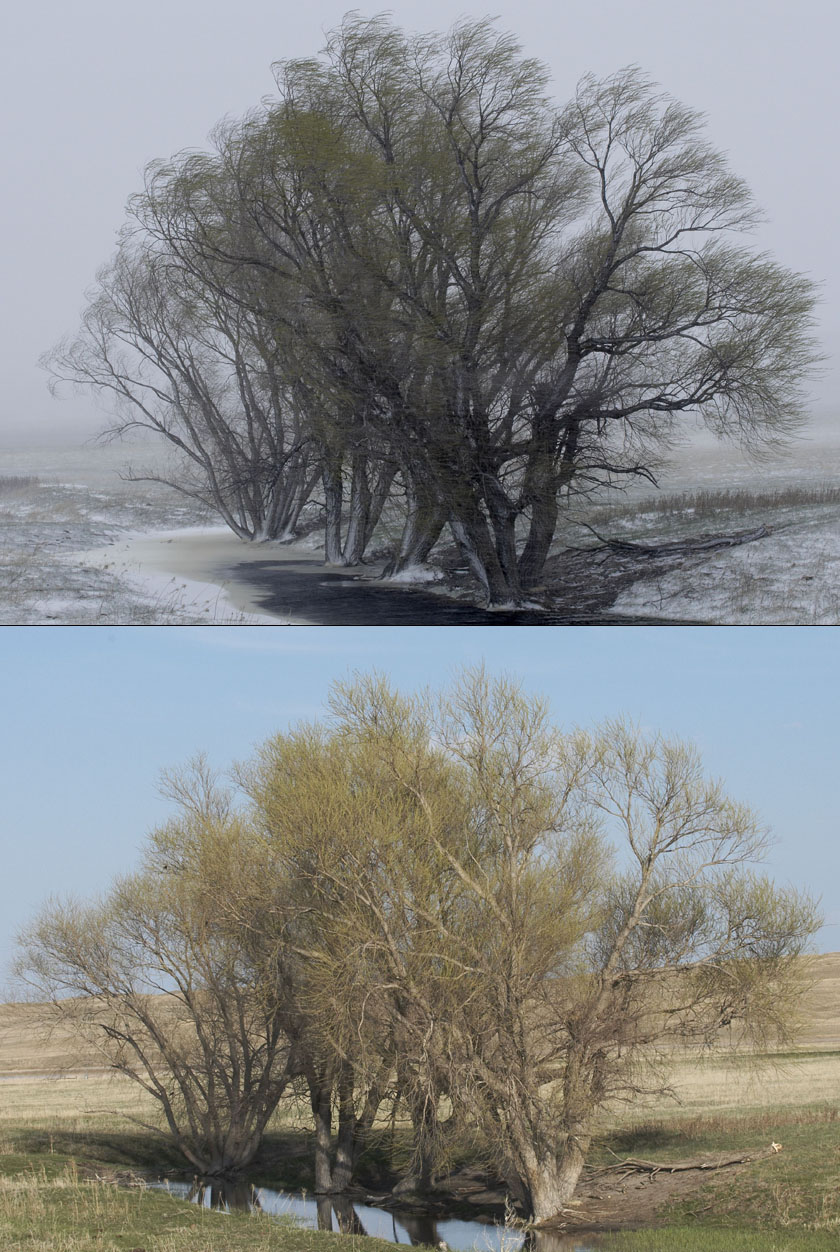
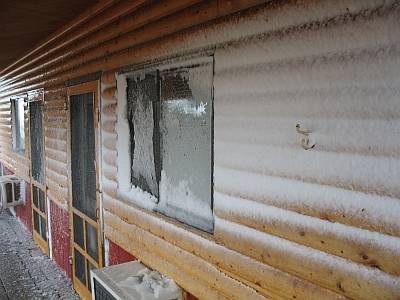
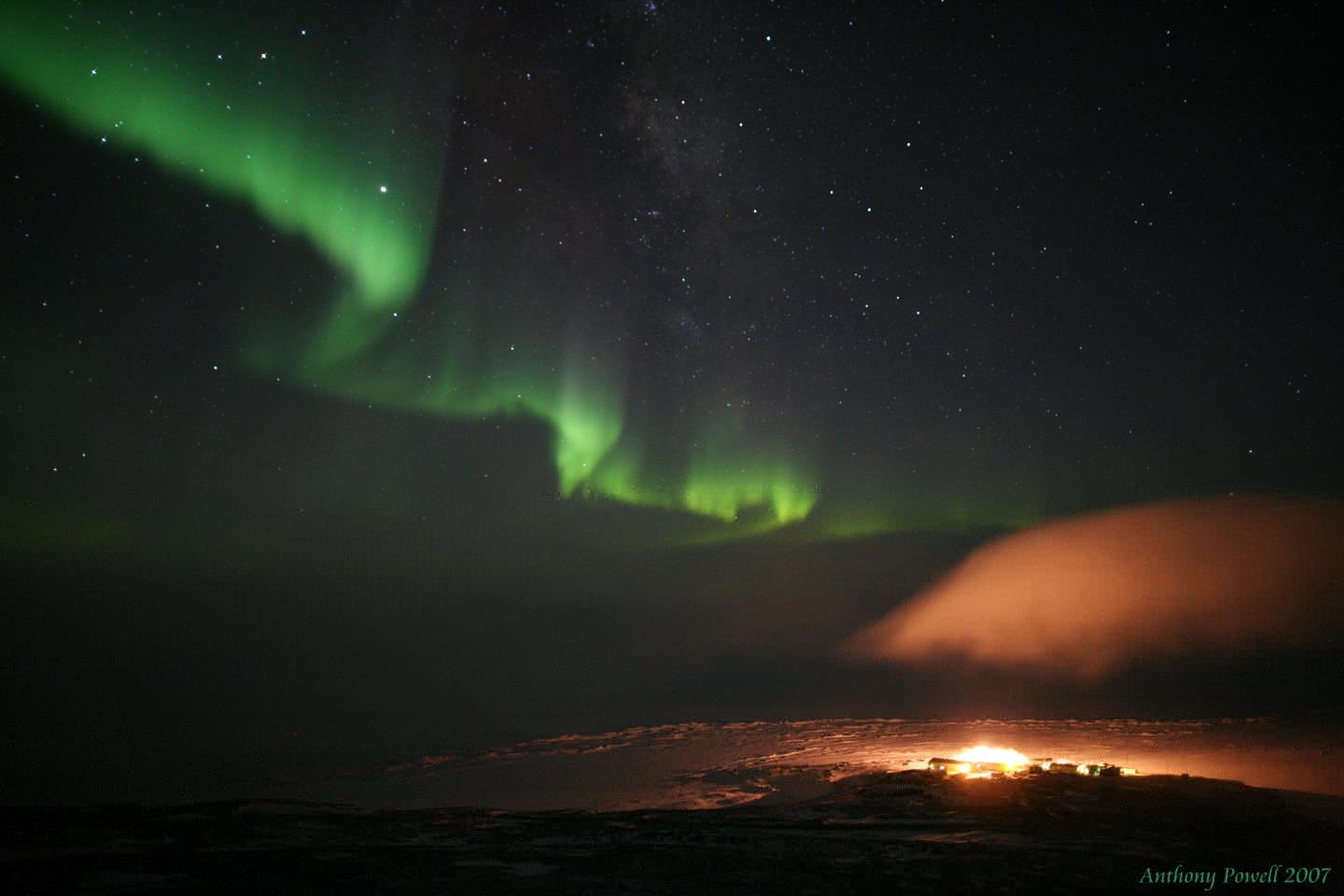
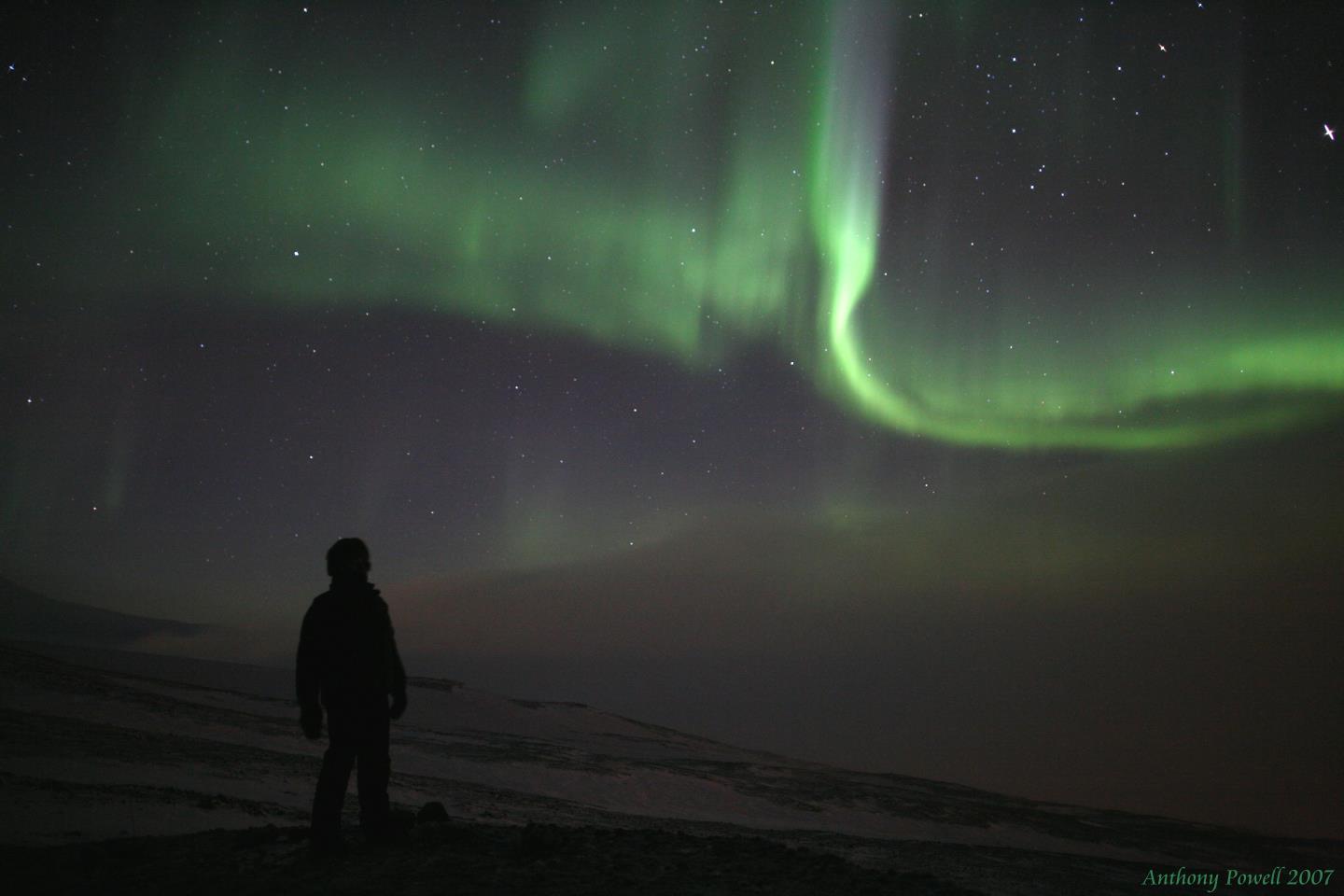
It is May 2nd. The middle of Spring. Two days ago, where I am now, it was 27°C. This is the most sheltered side of my cabin:


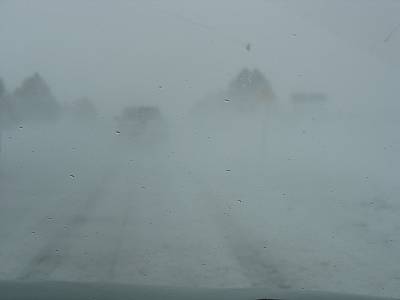
This is the approach to my cabin:


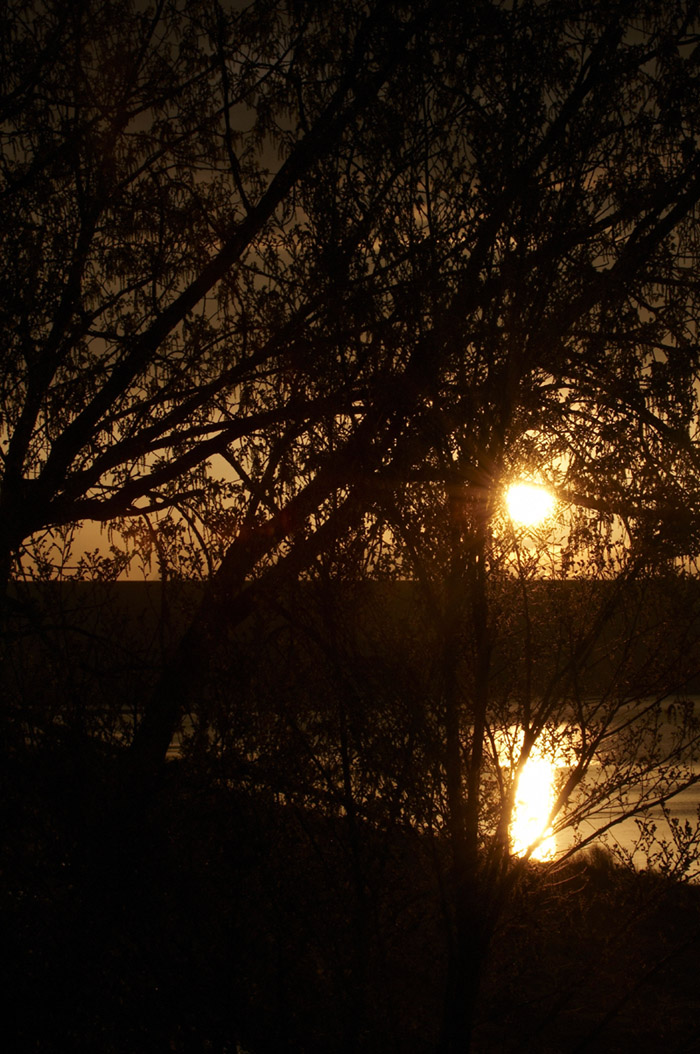
I have no exact numbers for you, but I can tell you that wind speed is strong enough to make the road's runoff flow directly uphill (at least in those sheltered little gulleys where the run-off hasn't simply frozen into two-lane Hieronymous Bosch frescoes on the spot). There are pelicans on the lake in front of me; at least, there were a couple of hours ago, before the viz declined so precipitously (get it?) that I could no longer see more than two meters offshore. Perhaps by now they are only Pelsicles.

Riddle me this: Where am I?

More to the point, what am I doing here?

Labels: ,

Tuesday, April 29, 2008

Dateline: Lincoln, Nebraska

Two items:
  1. US Customs officials continue to ably occupy the niche of gate-keeping trolls with tiny dicks and/or withered vaginas, who seem to think that people might actually want to stay in their miserable dick-ass country a day longer than absolutely necessary.
  2. Nature has accepted another story of mine for their ongoing "Futures" series. This one's called "Hillcrest v. Velikovksy", and it draws its inspiration from this entry here.

Labels:

Sunday, April 27, 2008

Gone to Ground

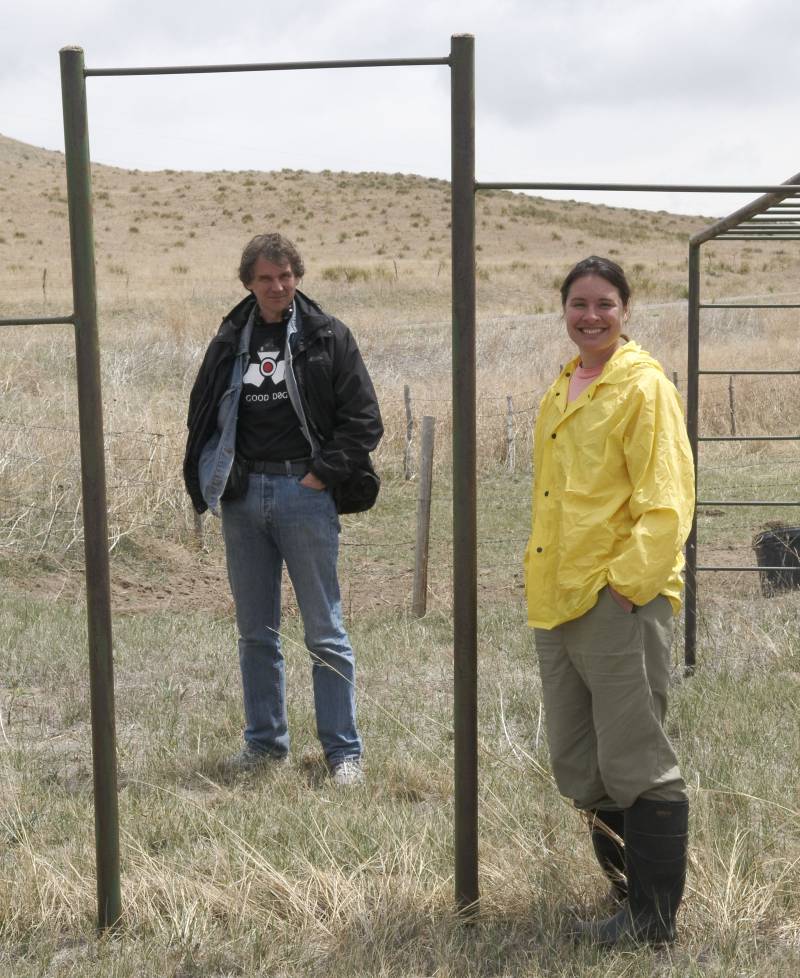
Packing now, to spend a month at a field research station in the so-called "Tornado Alley" of Nebraska — which is a nice coincidence, as those at last Thursday's reading will attest to the presence of a strong tornadoey element in the opening of the new novel. But I'm mainly just heading out to do some writing in a bona-fide desert environment (which also figures prominently in said novel), and to hang out with a buddy who's doing research for a nonfiction book of his own. (And oddly enough, even buddies doing research for nonfiction books of their own factor into the plot of the new novel.) (Yes, it's true. This new novel is really going to suck.)

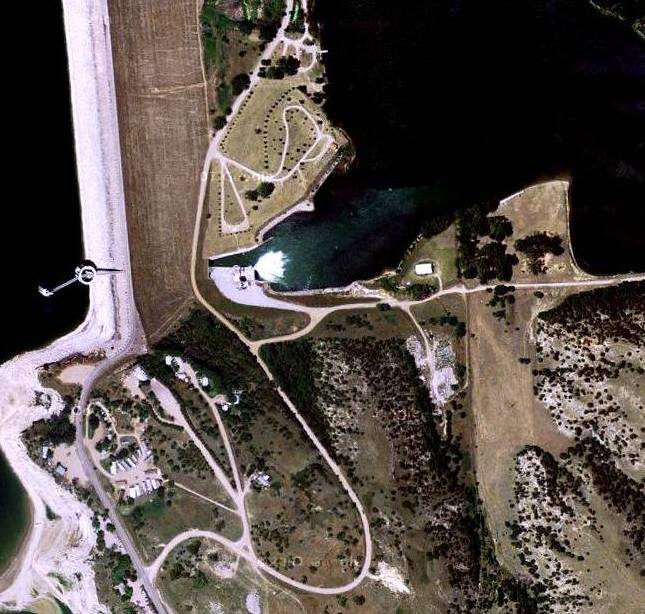
I will be at the Cedar Point Biological Station, somewhere around here:


I think I'm even supposed to give a talk or something. If your plane happens to crash in Lake Ogallala over the next month, drop on by.

Labels:

Friday, April 25, 2008

For Those Who Could Not Be With Us Last Night...

First, I am pleased and proud to announce that the Toronto Public Library does not overtly censor its public-access Internet terminals. True, if you enter "doggie snuff porn" or "bukkake" into the library's default search engine you get only a single hit — which, when clicked on, boots you into an endless log-in loop that keeps asking for password and ID until you get tired and go away. However, if you simply enter Google's URL directly into the nav bar you can bypass that entirely and wallow in all the sploogy, sour-cream-dip Asian wonderfulness that you desire. (I should mention for the record that I didn't even know what "bukkake" was until introduced to the term last night by a buddy who, perhaps wisely, does not appear to have an online presence I can link to.)

Anyway, you might wonder what I was doing testing the limits of the TPL's nannyware in the first place. I was killing time in the hope that more people might show up to my fucking reading if I gave it a few more minutes. It actually worked, kind of. The room was small but reasonably full — maybe, what, 20? 25? or am I flattering myself? — and not counting Bakkanalia and library staff I'd only met four of the attendees before. Of course, when I asked up front how many of the audience had even heard of me, a good chunk of the room put their hands up; I'm guessing that my hosts might have rounded them up with tasers for a spot of the ol' community service. On the other hand, most of the rest not only knew who I was, but had read most of my stuff. To reward them for their loyalty I read a previously unreleased bit of Dumbspeech. Then, since this was after all part of a larger, federally-funded effort promoting Canadian speculative fiction, I threw in "The Eyes of God". It has all the explicit Canadiana anyone would want: priests, pedophilia, a trip to the Northwest Territories, Westjet pimping the intrusive mindreading technology of multinational conglomerates, and the kind of if - you - don't - have - anything - to - hide - you - shouldn't - mind - this - camera - in - your - bathroom mindset that our current lawnorder government was so fond of before the RCMP busted them for cheating on the last election.
Afterwards a few of us went for beer, during which part of the discussion centered around whether Starfish or Maelstrom would translate better to film. I'm still of the opinion that a faithful Maelstrom movie might be a bit like watching a Terminator film in which every one of the stats and tactical overlays shown from the T-eye's view is essential to the plot. One of my companions mentioned the late Stanley Kubrick's opinion that the best movie adaptations are based on books with the least amount of actual plot, and suggested that Starfish would therefore be an ideal candidate. I decided then and there that I would not be paying my share of the tab that night.

Then there was the cab drive home, in which it was decided that the best way to present Starfish would be as "Starfish! The Musical!", featuring the hit dance numbers "Cold Fish" and "Daddy Does Me Best".

This morning I woke up sick. I'm sure there's no connection.

Labels:

Wednesday, April 23, 2008

Audio Art

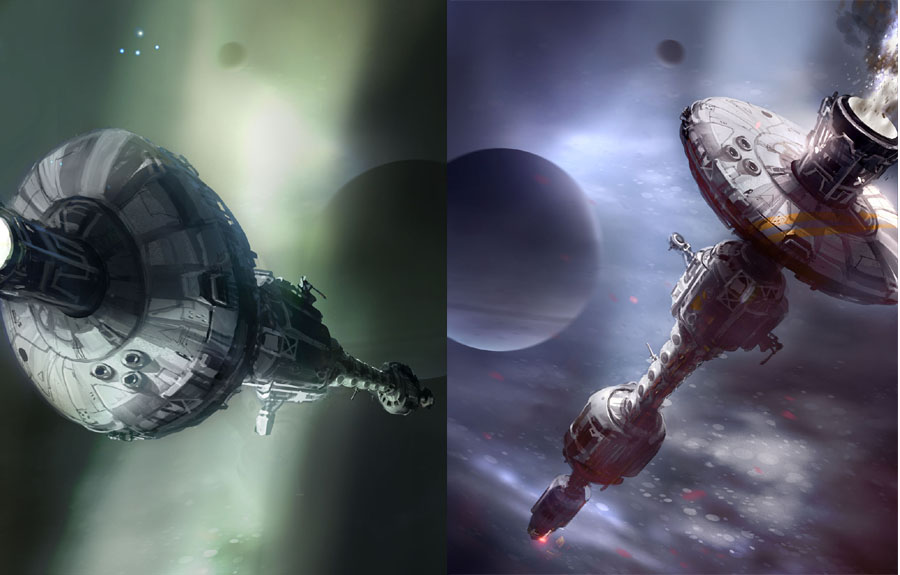
Blindsight is coming out as an audiobook from Recorded Books; check out the cover art by Leonard Likas (© Recorded Books, LLC):


Notice anything unusual for a Watts-type book? Notice anything unusual for a story set a half light-year from the nearest star, set in the dark and shadowy borderlands of interstellar space?

Notice the rich, radiant colors? WTF?

Well, Leonard took his lead from the synesthesiac's eye. There's a brief scene near the end of Blindsight where we get a hint of what Sarasti or Michelle might see if they looked outside, and it's beautiful. So's this artwork: an inventive departure from the usual dark, glum Wattsiness, and a nice addition to the Gallery.

Labels: ,

Tuesday, April 22, 2008

One Down, One to Go

The Toronto Public Library's Big Honking Series On Speculative Fiction kicked off last night, as promised, with a panel discussion between Jim Gardiner, Karl Schroeder, and myself, with Mike Skeet proving more than up to the task as moderator. It was pretty well-attended, if I do say so myself. And it was fun. We kicked around many ideas, we took many questions from the audience, and — best of all — we did it all at the expense of the Canada Council, whose disdain (nay, even hatred) for skiffy is the stuff of legend. I don't know how the TPL managed to slip this one under their radar — maybe the Council was lulled by the strategic use of the word "heritage" in the series title — but when they find out I bet they'll be spinning in their elbow-patched tweeds.

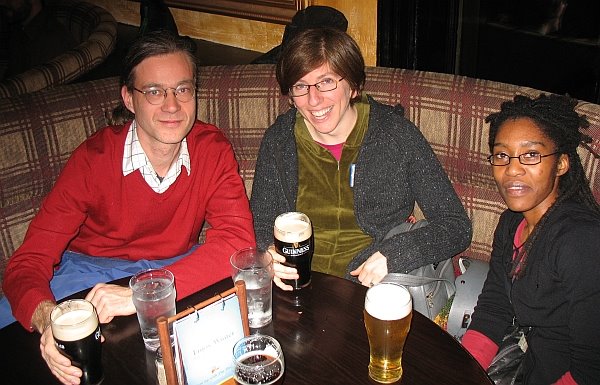
Afterwards a bunch of us adjourned to a nearby faux-Irish pub that had a Monday special on hamburgers and karaoke (although when challenged, they could not provide the track for Thick as a Brick. I sang it anyway.) I reconnected with some folks I'd met at SciBarCamp the month before (although, sadly, not Leona Lutterodt, who took this picture:)


It was a good night, and I shall cling to its memory, for my next appearance is unlikely to be quite so popular. It is way out in the boonies, you see ("The Bitches", as we in TO refer to them), and it is not a Grand Opening but only a reading, and the stage will not be festooned with four skiffy authors but only with me. I shall read. (The vampire-domestication talk is off the table, because it's been a couple of years since I've given it and I've been too busy to dust it off and rehearse.)

Just what I end up reading is up to the audience. I have a meaty little excerpt from a novel-in-progress, never before posted, never before seen by human eyes. I could premiere it out in the Beaches, if enough people in the audience already know my other stuff and want to hear something new. Or, in the more likely event that the audience is only there because they mistakenly thought that Avril Lavigne was going to be signing autographs and who is this Watts doofus anyway, I might just stick with old standards from my other novels because it'll all be new to them anyway. In either case I'll probably round out the evening with a recent short story or two.

So, for those of you who are a) local, and b) suckers for the obvious low-status manipulation I went for in the previous paragraph, here are the details:

Thursday, April 24, 7pm
Beaches Branch, Toronto Public Library
2161 Queen St. East, Toronto, ON, M4L 1J1
(northeast corner of Kew Gardens: map and further details here)

Come. There will be cake.

But we all know what that means.

Labels:

Thursday, April 17, 2008

I Couldn't have Said it Better Myself

Trudeau Was Wrong

The universe is not unfolding as it should. It is merely unfolding as it always has.

It was a nice dream while it lasted: a grass-roots campaign, launched and promoted by the scientific community, supported by Nobel Laureates, endorsed by the American Association for the Advancement of Science, pimped on science blogs far and wide: a debate among the three presidential candidates on science policy. Because word has it that science and technology might have some small amount of impact on, you know, the future of our fucking species. Just maybe.

And all three candidates have declined the invitation. Oh, Clinton and Obama tripped all over themselves signing up for a televised debate on "Faith and Values", of course, but then, faith is pretty much what you want it to be. You can make any statement you want, with no fear that some uppity chick with too many letters after her name is going to jump up and say Actually, we got the data on that, we did a multilinear regression and it got an radj.2 of 0.82 with P<0.0001,and according to those numbers God actually doesn't want you to put retarded children in the electric chair. That's the main reason faith sucks, actually.

Science is a whole different ball game. You shoot from the lip on climate change or El Nino and some guy who's spent his whole life studying the subject is liable to set you straight. And that's the thing about politicians. They don't like it much when it’s obvious that they're not the smartest ones in the room. (I rather suspect this is why Stephen Harper is such an intensely private man.)

I didn't expect McCain to go for it. He'd probably lose support if any of his base thought he had any respect for science. Clinton, well, we all knew she'd avoid it if she could, but there was hope she'd be shamed into it just to keep up with Obama. And Obama? The dude throws out enough curves (and catches enough of those aimed at his head) that he might have just gone for it.

But no. Once again, the status quo reigns supreme.

Fuck all of them. May drug-resistant syphilis saturate their bloodlines, may their genitals wither and drop off. You especially, Obama. You alone offered hope for real change, you alone made the unrepentant realists among us think Hell, if that guy is making it work, maybe we can turn this thing around after all. You actually made an optimist out of me, for a little while. And because of that, you suck harder than all the rest.

You're still way better than the alternatives, granted. But that's a pretty low bar to clear.

Labels: ,

Monday, April 14, 2008

Living in the Past.

Most of you here have read Blindsight. Some of you have made it almost to the end. A few have even got as far as the references (I know this, because some of you have asked me questions about them). And so you might remember that old study Libet did back in the nineties, in which it was shown that the body begins to act on a decision a full half-second before the conscious self is aware of having made the decision. A lot of Blindsight's punchline hung on this discovery— because obviously, whatever calls an action into being must precede it. Cause and effect. Hence, the johnny-come-lately sense of conscious volition is bogus. We are not in control. I mean, really: a whole half a second.

Half a second? Chun Siong Soon and his buddies piss on Libet's half a second. Nature Neuroscience just released a study that puts Libet's puny electrodes to shame; turns out the brain is making its decisions up to ten full seconds (typically around seven) before the conscious self "decides" to act.

Ten whole seconds. That's longer than the attention span of a sitting president.

It all comes down to stats. Soon et al took real-time fMRI recordings of subjects before, during, and after a conscious "decision" was made; then they went back and looked for patterns of brain activity prior to that "decision" that correlated with the action that ultimately occurred. What they found was a replicable pattern of brain activity that not only preceded the decision by several seconds, but which also correlated with the specific "decision" made (click a button with the right or the left hand). (Interestingly, these results differ from Libet's insofar as subjects reported awareness of their "decision" prior to the activation of the motor nerves, not afterwards. Whereas Libet's results suggested that action precedes conscious "decision"-making by a very brief interval, Soon et al's suggest that actual decision-making precedes conscious "decision"-making by a much longer one. Bottom line is the same in each case, though: what we perceive as "our" choice has already been made before we're even aware of the options.)

This isn't exactly mind reading. Soon and his buds didn't find a circuit that explicitly controls button-pressing behavior or anything. All they found was certain gross patterns of activity which correlated with future behavior. But we could not read that information if the information wasn't there; in a very real sense, your brain must know what it's going to do long before you do.

Obviously this can't be the whole story. If the lag between processing and perception was always that long, we would feel no sense of personal agency at all. It's one thing to think that you told your muscles to leap from the path of an approaching bus when the time discrepancy is a measly 400 millisecs; but not even organisms with our superlative denial skills could pretend that we were in control if our bodies had leapt clear ten seconds before it even occurred to us to move. So I would think this is more proof-of-principal than day-in-the-life. Still. As IO9 points out, given these results, how long before we can do without that stupid conscious part of us entirely?

Wired's online coverage is a bit more defensive. They bend over backwards to leave open some possibility of free will, invoking the hoary old "maybe free will acts as a veto that lets us stop the unconscious decision." But that's bogus, that's recursive: if consciousness only occurs in the wake of subconscious processing (and how could it be otherwise? How can we think anything before the thinking neurons have fired?), then the conscious veto will have the same kind of nonconscious precursors as the original intent. And since that information would be available sooner at the nonconscious level, it once again makes more sense to leave the pointy-haired boss out of the loop entirely.

But I'm going to take a step back and say that everyone here is missing the point. Neither this study nor Libet's really addressed the question of free will at all. Neither study asked whether the decision-making process was free; they merely explored where it was located. And in both cases, the answer is: in the brain. But the brain is not you: the brain is merely where you live. And you, oh conscious one, don't make those decisions any more than a kidney fluke filters blood.

(Oh, and I've figured out who the Final Cylon is. For real this time. Romo Lambkin's cat.)

Labels: , ,

Music is a drug

At least, the endorphin receptors in my head are still buzzing madly almost an hour after the encore ended. I kind of lost touch with Oysterband back in the early nineties, when they decided no one was listening to their lyrics anyway so they might as well just have fun and do covers of I Fought the Law. Except I was damn well listening to their lyrics, and their music, and I always thought I Fought the Law blew goats. So I went away.

But evidently that was just a phase, because I just saw them and it was the best fucking concert I've been to in years. The mix and the acoustics were as clean as a studio recording, except they were right there, live, in front of our table. The new tunes were great, the old ones lovingly rendered, and even the cover they did sneak in — the ancient traditional John Barleycorn — was an electric revelation in close harmony with massive percussion.

I tell you, the UK grows the best groups...

Labels: ,

Thursday, April 10, 2008

Dying with Dignity

Anna Davour, a Post-doc out of Queen's, has been hitting up various sf authors for informal bloggable interviews. This week was my moment in the sun. I say some nice things about the Sarah Connor Chronicles, and repeat my usual grumbling about Firefly.

And if you're not satisfied with mere wordage— if any of you feel the need to encounter me face-to-face, if only to see for yourselves whether my headphones are surgically attached— it looks like I'll be emerging from my hole to participate in something called the "Canada Council Heritage Series of Speculative Fiction", being hosted by the Toronto Public Library over the next few weeks. I'm not entirely sure what the whole program consists of (the TPL's website is mum on the subject so far, and my contract is evidently in the mail), but I'm going to be showing up on two occasions: the official kick-off on April 21, and a somewhat darker event on the 24th.

Here is what I know: the kick-off is a group affair involving fellow skifscribes Karl Schroeder and Michael Skeet, and probably someone else TBA James Alan Gardner. It's happening at The Lillian H. Smith branch ( 239 College St. Toronto, Ontario, M5T 1R5) between 7:00 and 9:30pm. I was asked to suggest a possible theme, with the caveat that there had to be some kind of Canadian angle; I suggested "Embracing Apocalypse: How Canadian SF Can Help Us Die with Dignity", and was gently told that no such title would ever be allowed on a TPL poster. As of this writing the title has been changed to "Embracing the Future: How Canadian SF Can Help Us Embrace the Future".

Yeah, I know. It sucks like Cygnus. I disown it utterly. But at the very least it'll give me something to complain about right off the bat. Could be an effective icebreaker, assuming I don't care if these guys ever invite me back again.

The second event is All Me, and is being held from 7:00-8:15pm at The Beaches branch (that's 2161 Queen St. E. Toronto, Ont. M4L 1J1). I'm not entirely sure what I'll be doing there. It was originally suggested that I give a live performance of the Vampire Domestication talk, but I don't know how well something like that would go over with a non-sf audience. I've only delivered it twice live, both at cons, and while it killed both times the con-goer sensibility isn't entirely conventional. I'm not particularly concerned about whether a more mainstream audience would be offended, mind you; I just don't know if they'd get it. So maybe I should just do a more conventional reading— a short story, maybe an excerpt from a novel-in-progress. Assuming my stories aren't to even more peculiar tastes than the talk would be.

Any suggestions? Reading or talk? If reading, any suggestions as to content? Help me out here.

Update 11/4/08: The event is now listed at the TPL website. They are hosting a lot of events for this thing. And I notice that they've explicitly stated that I'll not only be reading, but reading from Blindsight. Which is not something I've actually decided yet, so for the time being let's just act as though someone jumped the gun, and continue on with the whole what-should-Peter-do thread. (OTOH, they are the ones writing the cheque, so if it turns out that they do strongly desire a Blindsight reading, that's what they get.)

Labels:

I am a Sad Pathetic Man

I dreamed last night that I kept hitting on Katee Sackhoff, and she kept turning me down. That's right: Starbuck, the antiMikey of sexual cereals, wouldn't even give me the time of day in my dreams.

But I'm not going to go with the obvious subtext here, because I am desperate to give my imagination credit for more subtlety. What it's really telling me to do, I think, is to start collecting Return-of-Starbuck theories, and to do it soon before IO9 ruins all the speculation with one of their spoiler strafing runs.

So. Starbuck theories. Place them here.

Labels:

Friday, April 4, 2008

Cybersnot

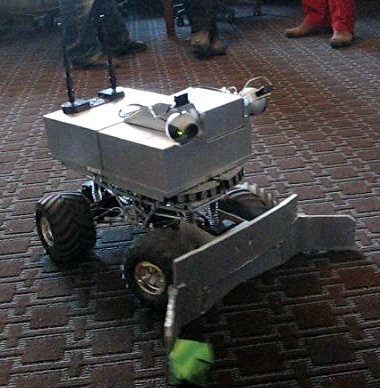
Inspired by the synergy of my own stuffed, crusty, raw red nose and the long-awaited return of Battlestar Galactica (and if you haven't seen the season premiere yet, what are you wasting time here for? Get onto BitTorrent and start downloading right fucking now, do you hear me?), I am reminded of this little tech item sent courtesy of Alistair Blachford from UBC: the importance of mucous for the optimal functioning of robot noses. It seems that snot is essential to trap and distribute airborne molecules so they can be properly parsed by olfactory sensors. And that in turn reminds me of this earlier article from Science, which reports that sweat might also be an integral part of robot makeup, since evaporative cooling can double the power output of robot servos. The same paper reviews current research in the development of artificial muscles. I wonder how many more wet and sticky and downright organismal traits are going to prove desirable and efficient for our robot overlords. Is it possible that fleshy terminators and death-fetish replicants and even hot Cylon chicks look and taste and feel like us not merely for infiltration purposes, but because form follows function? Do the best robots look like us? Are we the best robots?

Not in every way, I hope. The best robots gotta have better arch support. And it wouldn't kill them to put their visual cabling behind the photoreceptors for a change.

Oh, and those wisdom teeth have got to go.

Labels: ,

Monday, March 31, 2008

Madonna and Child.

This time I open my eyes to a familiar face I've never seen before: only a boy, early twenties perhaps, physiologically. His face is a little lopsided, the cheekbone flatter to the left than to right. His ears are too big. And while the eyes below his frown shine with their own bright intelligence, I know immediately that he is natural.

I haven't spoken for millennia. My voice comes out a whisper: "Who are you?" Not what I'm supposed to ask, I know. Not the first question anyone on Eriophora asks, after coming back.

"I'm yours," he says.

I want to let that sink in, but he doesn't give me the chance: "You're not scheduled for this shift, but the Chimp wanted extra hands on deck. We've got kind of a situation brewing on this next build."

"Situation?" It can't be good; the appearance of new crew can only mean the death of old.

"Maybe a contact scenario."

I wonder how many centuries ago he was born. I wonder if he ever wondered about me, before now.

He doesn't tell me. He only says, "There's a sun up ahead. Half a lightyear. It's — flickering. Chimp thinks maybe it's talking to us."

And Chimp's not smart enough to deal with it on his own. They built him that way.

"Anyhow..." My son shrugs. "It's not like there's any mad rush. You've got lots of time to catch up."

I nod, but he hesitates. He's waiting for The Question, but I already see a kind of answer in his face. Our reinforcements were supposed to be pristine, built from perfect genes buried deep within Eri's iron-basalt mantle, safe from the sleeting blueshift. And yet my son has flaws. I see the damage in his face, I see those tiny flipped base-pairs resonating up from the microscopic and bending him just a little off-kilter. He looks like he grew up on a planet. He looks borne of parents who spent their whole lives hammered by raw sunlight.

How far out must we be by now, if even our own perfect building blocks have decayed so? How long has it taken us to get here? How long have I been dead?

How long? It's the first thing everyone asks.

This one time, I don't want to know.

Labels:

Saturday, March 29, 2008

Earth Hour. Because the World Isn't Worth a Whole Day.

Ninety percent of the world's charismatic megafauna is gone. Hormone disrupters are turning the fish off Lakeshore into hermaphrodites, if the tumors don't get them first. The Arctic is heading for ice-free status by 2030, the Wilkins Ice Shelf is a measly six kilometers away from disintegration, air pollution in this miserable dick-ass excuse for a country alone helps kill 16,000 people a year. How do we rise to this challenge? How do we lie in this bed we have made?

Earth Hour. Sixty minutes during which we turn out the lights and pat ourselves on the back for saving the planet. Kings, Corporations, and Communities are all very much on board with this, naturally: in what other context could anyone pose so publicly while actually doing so little? Today's edition of my local Toronto Star is creaming its jeans all over Earth Hour; they're giving it almost as much coverage as can be found in any three pages of the two thick sections they devote daily to selling automobiles. Hundreds, maybe thousands of Torontonians will celebrate the event by climbing into their SUVs and driving out to Downsview Park, there to light candles in the darkness. The Eaton's Center up at Yonge and Dundas is festooned with all sorts of big glossy posters trumpeting their whole-hearted love of Mother Earth. Why, I'll bet the reduced environmental impact from turning off those lights might even recoup a small fraction of the resources consumed to drive the massive multimedia extravaganza advertising Earth Hour.

Oh, wait. There isn't going to be any reduction in environmental impact. Not unless the world's power-generating utilities decide to scale back the fossil fuels they're burning to reflect a one-time, one-hour tick in the time series.

Yes, I know. It's only supposed to make "a statement". It's supposed to be a symbol. And what does it symbolize, exactly? It symbolizes "hope" — which is to say, our infinite capacity for denial, our unwillingness to restrain ourselves in any meaningful sense, our brain-dead refusal to see the brick wall we're hurtling towards. It symbolizes the sick fucking joke that is the human race.

Back in the early nineties I had a girlfriend who volunteered for the Guelph branch of OPIRG. Sick of the flood of smiley-faced books and schizoid puff pieces insisting that being green doesn't mean giving up your second SUV ("And now I sleep just fine at night, knowing that by serving one meat-free meal a week, I'm doing My Part to Save the Planet!"), she proposed countermeasures: a booklet entitled "Fifty Ways to Ease Your Conscience While Continuing to Destroy the Environment." I thought it was a brilliant idea. Everyone at OPIRG absolutely hated it. Too cynical, they said. Too negative. It'll alienate more people than it converts. We must be cheerful. We must be positive.

Evidently this is a fairly common rule among environmental activists afraid of alienating the skittish: No Cynicism. (Which, these days, is tantamount to saying No Cognition...) And so now, after more than a decade of putting on a happy face to keep from scaring the soccer moms, here we are: Earth Hour.

How far we've come.

There was never a time when things could be turned around with such petty gestures. You want to effect real change? You've got to address the root of the problem: human psychology. We evolved in the moment, we evolved to recognize imminent and proximate threats: pestilence, predators, an alpha male coming at us with murder in his eyes. The sight of a rotting corpse or a deformed child makes us squirm; the toothy smile of a great white freezes our blood. But we never evolved to internalize graphs and columns of statistics. They may be real; they just don't feel that way.

They're starting to now, though. Now, even here in the privileged and so-called "developed" world, we're starting to reap what we sow. The outbreaks break out ever-faster, the critters on our doorsteps die in record numbers. But even now, that's just us— and we're not the ones calling the shots. The ones piloting the Titanic are way up in the bridge, isolated, unaffected, never more than a heartbeat from sparkling sands and clean water and the very best in medical care. It's still gonna be a while before the shit piles high enough to matter to them. And so they'll do nothing, because for them the threat is not imminent; and if it is not imminent, neither is it real. So sayeth the Human gut.

So, you want to effect real change? You've got to make the threat matter to the ones who matter. You have to take the shit into their hallways until even they can smell it. You have to threaten something valuable to them, and threaten it now, if you want to awaken that fierce innovative spark of self-preservation that burns brightest when the danger is in your face and the piss is running down your leg.

This is what you'd have to do: hunt down the Harpers and the Gordons and the Martins, the Roves and Cheneys, the Harrises and the Kleins and Bairds. (You might want to hunt down the Dubyas, too— they don't make any of the real decisions, but the symbolism is important.) Dig up the carcass of Dixie Lee Ray while you're at it, and throw its sorry rotten parts into the corral with her living soul mates. (For seasoning, you know.) Hunt down every pundit and commentator who, after years ridiculing the signposts, now shrugs and says Oh, well, I guess we fucked up the planet after all. Too late to fix it now, let's just adapt and make sure that economic growth doesn't drop below five percent... Take every family member who sided with any of them (most have); explain to them all the proximate nature of threat-perception in the human animal, and that you're going to motivate them only way you can.

Then kill half of them. Give the other half a year to fix things. Hold back their families in, as the publishers say, "reasonable amounts against returns".

That's probably what it would take to get these people to give a shit.

Of course, you could never pull it off. All that security, all that well-founded fear of those being governed. And you know, even if the bridge crew did suddenly get serious and try to turn things around, we're still in for a really rough ride. The trajectory of a planetary biosphere is not something you can change on a dime, especially not after the race downhill has been picking up speed for half a century. It's probably too late no matter what we do, unless Venter and Kurzweil turn out to be right.

Still, there's something to be said for simple accountability. And you might even find allies in some pretty unlikely places. Air pollution alone must kill more people in a month than all the serial killers anyone ever sent to the gas chamber; any death-penalty advocate capable of even rudimentary logic would pretty much have to get on board...

Anyway. Pondering such solutions will make my Earth Hour go down a little easier, as I sit here in the dark. I hope it does the same for you.

Labels: , ,

Friday, March 28, 2008

From. About. By.

Me, that is. Isn't it always?

From: a few excerpts from the recent Locus interview have gone online. It's not the whole thing, but it's a taste.

About: Puppy Buckets (whose name still makes me think of wood-chippers) likes Maelstrom. Maybe not as much as they liked Starfish, but then, a lot of people felt that way. And I'm not complaining about any exposure, given that the damn book's been out of print for years.

By: Didn't I warn you I'd be rebooting the In Progress page? Didn't I?

Labels:

Thursday, March 27, 2008

Your Brain is Leaking

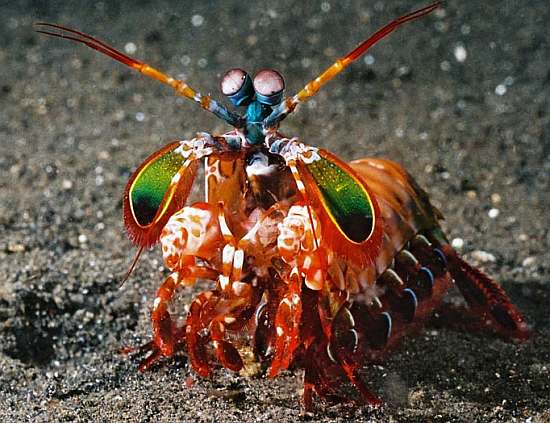
This punch-happy little dude has been all over the net for the past week or so: easily the world's coolest crustacean even before then, insofar as how many lifeforms of any stripe can bash their furious little claws through the water so fast (accelerating at over 10,000G!) that the resulting cavitation bubbles heat up to several thousand degrees K? If their ferocious little chelipeds don't take you out, the shockwave alone will shatter you (well, if you're a piece of mantis-shrimp prey, at least).

The reason for their recent fame, though, is this paper in Current Biology, reporting that — alone of all the known species on the planet — these guys can see circular polarised light. And that's just the latest trick of many. These guys see ultraviolet. They see infrared. They can distinguish ten times as many visible-light colors as we can (still only 100,000 — which you'd think would at least shut up those Saganesque idiots from Future Shop who keep blathering about the millions and millions of colors their monitors can supposedly reproduce). Each individual eye has independent trinocular vision. Mantis shrimp eyes are way more sophisticated than any arthropod eye has any right to be.

But what really caught my attention was a line in this Wired article (thanks to Enoch Cheng for the pointer):
"One idea is that the more complicated your sensory structure is, the simpler your brain can be... If you can deal with analysis at the receptor level, you don't have to deal with that in the brain itself."
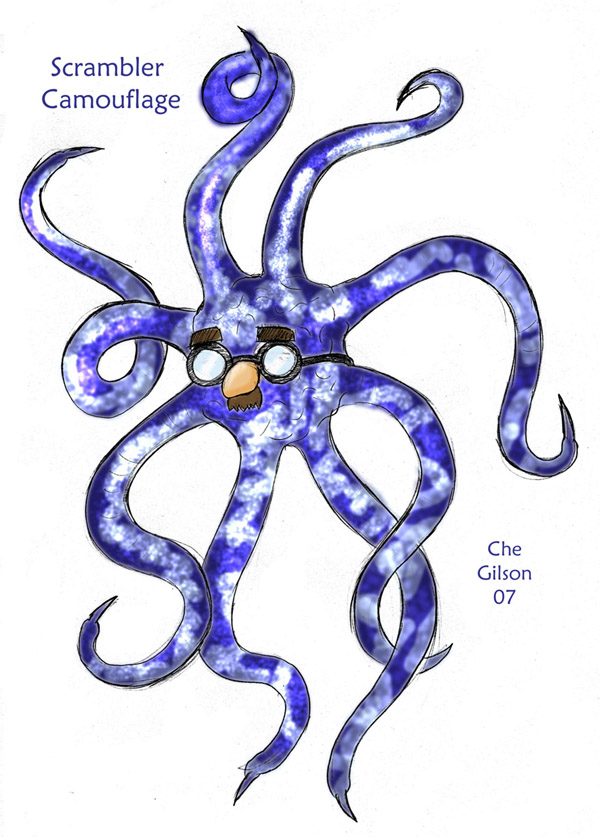
Which is almost as cool as it is wrong. Cool because it evokes the image of alien creatures with simple or nonexistent brains which nonetheless act intelligently (yes, I'm thinking scramblers), and because these little crustaceans aren't even unique in that regard. Octopi are no slouches in the smarts department either — they're problem solvers and notorious grudge-holders — and yet half of their nervous systems are given over to manual dexterity. Octopi have individual control over each sucker of each tentacle. They can pass a pebble, sucker-to-sucker, from arm-tip to arm-tip. Yet their brains, while large by invertebrate standards, are still pretty small. How much octopus intelligence is embedded in the arms?

So yes, a cool thought. But wrong, I think: because what is all that processing circuitry in the mantis shrimp's eyes if not part of the brain itself? Our own retinas are nothing more than bits of brain that leaked across the back of the eyeball— and if the pattern-matching that takes place in our visual cortices happens further downstream in another species, well, it's still all part of the same computer, right? The only difference is that the modules are bundled differently.

But then this artsy friend points out the obvious analogy with motherboards and buses, and how integrating two components improves efficiency because you've reduced the signal transit time. Which makes me think about the "functional clusters" supposedly so intrinsic to our own conscious experience, and the possibility that the isolation of various brain modules might be in some way responsible for the hyperperformance of savantes1.


So pull the modules apart, the cables between stretching like taffee — how much distance before you're not dealing with one brain any more, but two? Those old split-brain experiments, the alien-hand stuff — that was the extreme, that was total disconnection. But are we talking about a gradient or a step function here? How much latency does it take to turn me into we, and is there anything mushy in between?

Are stomatopod eyes conscious, in some sense? Is my stomach?


1 I would have put a link to the relevant article here, but the incompetent code over at The Economist's website keeps refusing to to open up its online back-issue pdfs until I sign in, even though I already have. Three times now. Anyway, the reference is: Anonymous., 2004. Autism: making the connection. The Economist, 372(8387): 66.

Labels: ,

Friday, March 21, 2008

Flash & Flesh

After endless harangues from various online sites telling me I couldn't view their fucking galleries until I installed the latest version of Flash, I overcame my usual aversion to so-called "upgrades" (MediaPlayer 11, anyone?) and complied.

Now the Vampire Domestication talk (here, and here) is broken in Firefox (both 2 and Beta), Netscape, and Opera: a few seconds of click-ridden vocals and then the soundtrack goes dead. (I am miffed to have to admit it still seems to work okay in Internet Explorer 6 because Microsoft isn't supposed to make software that works better than its competition.) And it's not just the online copy; my local back-ups have crapped out too. I find it unlikely that all these copies would simultaneously die on me, so I'm left hypothesizing that this new Flash plugin has backwards-compatibility issues. (Some quick surfing suggests that sound has always been a bit problematic for Flash, although I haven't encountered any specific complaints about this latest V9).

I know one or two of you have encountered the same problem over the past couple of days when trying to access VD. What I don't know is the configurations under which other people's problems manifest. So if you've got a moment, could you try it out — there's no need to listen to the whole thing, you'll be able to tell whether it's working by the second slide — and tell me whether it works for you, along with your current version of Flash, and the make and model of your browser?

Thanks.

On the up side, I got my first Paypal donation from a sex site— or more precisely, from one of those Make-any-woman-your-sex-slave-for-$29.99 places. (Don't click if you have an aversion to pop-ups or the overuse of exclamation marks.) I have to admit I was kind of taken aback; these outfits are usually about separating you from money, not putting it into your pocket. Even more surprisingly, when I sent off a bemused thankyou note (promising, in their honor, to spend the money this time on edible condoms rather than the usual kibble), I received a cheerful response praising my work on its literary merit, and completely free of any mention of hot chicks slippery with desire for my manhood.

Not that I would turn anything like that down, you understand. But still. I had no idea. I am so tickled.

Labels:

Tuesday, March 18, 2008

Fallen Giant

Sometimes, in defiance of entropy, little knots of complexity form in the universe and awaken. I have always found it deeply unjust that such knots, sooner or later, always stop. Each is unique, each cognizant, and if I were running things, the moment matter developed enough complexity to look around and start asking questions, well, it would have made it. It would go on forever. (Well, except for those clumps of matter who hold beliefs substantially different from mine, I mean.)

I entertain such thoughts whenever I look upon a loved one that I know is doomed to die some day, and I generally keep it to myself. But today I forego that privacy, because today, Arthur C. Clarke is dead. And that should matter to all of you.

Labels: ,

You Know Who You Are.

Anyone who rattles off phrases like "the fetid litterbox of his deranged and hostile cats" with such effortless abandon can wax my balls any time. Even if they got the whole bathrobe thing completely wrong.

Labels:

Sunday, March 16, 2008

No Syndrome. Just Imposter.

I've just spent the weekend hanging out with a hundred assorted artists, scientists, activists, activist/scientists, scientist/artists, authors, game developers, journalists, journalist/scientists, scientist/authors, jactarviscidevthors, two Mars-rover robots with genetic programming, and a solar-powered car (which as far as I could tell, could only go downhill). Most of those interactions were fairly diffuse — there's a limit to the number of folks you can actually sidle up to in a single weekend of freeform talks, demos, and debates. Some were a bit depthier. A few fed my ego (hey, there were people there who liked my books!). Many left me feeling humbled and completely inadequate. One or two did all of these at once.

I mean, at least you know what to expect when Lee Smolin of the Perimeter Institute takes the stage. He tells you up front that his goal is to leave you befuddled, and it takes him all of five minutes to convince us all that nobody really knows what mathematics even is— or, for that matter, what the word "exist" connotes. And when someone introduces herself by saying she liked Starfish, you of course immediately check her out online and are pleased to see that her expertise in systems theory means that she's probably smarter than you, which is good because it means your success in fooling her definitely beat the odds.

But some people should come with warning signs. Polymaths should not go incognito. They should not be all down-to-earth and pass themselves off as someone who "teaches The Physics of Music to Artsies" and who happens to do a little jazz singing on the side when in fact they have a doctorate from fucking Oxford and are doing polymer microlithography with cell-design applications while "on the side" putting out three albums and singing for presidents1 and foreign dignitaries and jamming with people whose last names rhyme with Knopfler. They should not share hearty chuckles with you over that other attendee falling into a diabetic coma en route to the restaurant. Because when they do all these normal things you have no way of realizing how completely outclassed you are at this shindig, until you get back online. And by then, of course, it's too late. You've already spent the whole damn evening acting like you belonged there.

And all of this really happened. To a friend of mine. The up side is, my friend's list of people he can pester for help on technical issues is now a bit longer than it was.

It would, however, be a bit easier to stand on the shoulders of all these giants if they weren't all several inches shorter than me.


1I'm not talking lame-ass company presidents either, here. I'm talking superpower presidents.

Labels: ,

Friday, March 14, 2008

Coming in Perhaps a Bit Behind the Penguin Craze Curve...

The penguin chick bursts from the shell
His fetal bed has served him well
But now, the newborn child will rest
Within his windswept, treetop nest.

Oh penguin child, oh fledgling fair
Stay snuggled in your jungle lair
And when your mother comes to rest
You'll suckle at her feathered breast.

Heed not the snarl, fear not the roar
The beasties on the forest floor
You need not fear death's gnashing jaws
Or felines with extended claws

Sing out your cry! Spit out your note!
Like gobbets from the drunkard's throat!
Oh penguin, king-of-birds to be
Sing out from your acacia tree!

Your soaring, graceful penguin glide
Doth make me feel so good inside
So fly! And kingly bird, bestow
Your guano on us, far below.

Labels:

In Praise of MPD

This month's New Scientist carries an opinion piece by Rita Carter, author of the imminent Multiplicity: The New Science of Personality. She's not the first to argue that multiple personalities may be adaptive (the whole backbone of the eighties' MPD fad was that they served to protect the primary persona from the stress of extreme abuse), nor is she the first to point out that MPD is just one end of a scale that goes all the way down to jes' plain folks adopting different faces for different social contexts (what Carter calls "normal multiplicity"). She does, however, suggest that "normal multiplicity could prove useful in helping people function in an increasingly complex world"; which raises the possibility that what we now think of as "pathological" multiplicity might prove useful in a hypercomplex world.

Cue the Gang of Four.

This is one of the themes introduced in Blindsight that I'm going to town on with Dumbspeech (okay, okay: State of Grace): that humanity is, in effect, splitting into a whole suite of specialized cognitive subspecies as a means of dealing with information overload. (You can see the rudiments of this in the high proportion of Aspies hanging out in Silicon Valley, perhaps.) But I've never encountered this Carter person before. Judging by her brief essay, I can't tell whether she's actually on to something or whether she's just putting neurogloss lipstick on the trivially obvious fact that it makes sense to behave differently in different situations (rather like making the Atkins Diet sound all high-tech and futuristic by describing it as "hacking the body").

Anyone here read her books? Are they any good?

Labels: , ,

Wednesday, March 12, 2008

Auntie Semite's Troubling Tales

In a nice change from the usual nocturnal scenarios about teeth falling out or earthworms tunneling through my flesh, last night I dreamed I was involved with Angelina Jolie. It was pretty nice, except for the part where we got kicked out of a B&B in Guelph because I'd broken someone's vintage 45. She didn't even transform into a flesh-eating zombie at an inopportune moment, thus causing me to lose my erection. (Anyone else out there hobbled by a Baptist conscience knows exactly what I mean.)

I really have to get out more.

Anyway, I awakened in a generous mood, as apparently did someone at Nature a few days back, because he was happy to loosen the restrictions on my contribution to their "Futures" series. So after two years of comatose brain-death, the "Shorts" page has finally got some new material on it: "Repeating the Past", first appearance in Nature, third appearance in Hartwell and Cramer's Year's Best SF 13, second appearance right here. Or here, if you'd prefer to download the spiffy, official Nature pdf.

Now I've got to shock the "In Progress" page back to life...

Labels:

Monday, March 10, 2008

A Passing Phase

We've left so many things behind us. We celebrated the death of Earth itself, though we were dead to the world when Sol cooled and bloated and devoured it in a single bite. It wouldn't have mattered; we were far beyond the light cone by then anyway. But we woke for the next build, and checked the time, and toasted the passing of our homeworld and any who might still be aboard her. And got to work.

They were right, the dust who sent us out here so long ago. I've lost count of the times the gates we built just sat there, dark and lifeless, until they passed from sight. Other times, though, things came out. Sometimes they even looked like people, and occasionally they spoke to us. Once a gate burst open spewing nothing but rads and plasma, as though a nova had erupted on the other side. More than once, things emerged that didn't look like they could have descended from anything remotely human. They reached after us. Mostly we've been able to keep our distance.

Once we took on a hitchhiker, an immortal from the twenty-eighth century who caught up with us in a ship made of spider silk. Some still remembered us, she said; to some we had achieved the status of myth, by the simple virtue of continued existence. Many of our sister ships — almost all of them — had long since run aground.

She didn't come to bed with us. For four thousand years she wandered Eriophora's endless dark warrens all by herself. Something happened to her during that time. I don't know what. I think, maybe, something came aboard. She wouldn't talk about it. It changed her in ways I can't describe.

Immortality. She said it was only a phase.

Sometimes we had to choose between the things we set free and the things that lay in wait. We're not the only ones to covet the Goldilocks zones, you see. Sometimes we closed on target to find strange and bejeweled gates already humming with unfamiliar energy. Or we found ourselves caught in ancient cross-fire, coasting inexorably towards the automatic holocausts of extinct races who forgot to turn their wars off when they left. Sometimes our only hope was to build a gate in the teeth of that approaching storm, and pray that whatever came out behind us would be willing and able to take on the things up ahead.

It's not just dangerous, though; it's also beautiful. Nebulae lovely enough to break your heart, even as you devour them. Endless expanses of Dyson spheres: tenuous, iridescent things light-minutes across, fragile and indestructible, blown taut as soap bubbles by the faintest stellar winds. They're alive, you see. They contain multitudes, these vast and intelligent membranes. Every sublime thought takes years to unfold.

They can be evil fuckers sometimes, though. Full of hate.

So much we saw. So much we left behind. And then one day, the gate we'd just built stuttered impossibly online before we had booted it. That was the last we saw of the Milky Way.

*   *   *

We left each other behind, too.

Back in the old days we needed each other more than the mission did. It only took one of us to deal with the routine builds, but we stuck them out together anyway, hairless primates huddled together against the cold. It didn't last. We got bored, we got testy. Started sleeping through the other guy's shift. We still had relationships back then, still fucked and cuddled and held each other against the raging of the night; but then those bonds would break and it was just easier to stay in the grave while the other resurrected, easier to share your waking hours with memories than with flesh and blood. I've gone a million years without seeing another pair of human eyes looking back at me. Sometimes people die in your sleep, and the others forget to leave a note. It can take aeons to realize that someone's gone.

Now I'm the only one left. Halfway to the edge of the universe, everyone else dead or turned back or — diverted, along paths orthogonal to my own. It's just me and the chimp, now.

I can't even remember their names.

Labels:

Sunday, March 9, 2008

Mind Reading Technology...

...has been a staple of every low-budget piece of celluloid skiffy going back at least to that early-sixties Gerry-Anderson puppet show Stingray (which no one with any dignity will admit to having watched, although I clearly remember the episode with the mind-reading chair). The Prisoner also featured an episode in which No. 6's dreams could be probed, and the various incarnations of Star Trek must have had a half-dozen such episodes among them although they all seem to run together after awhile (the episode I'm thinking of had aliens with bumpy foreheads; does that help at all?).

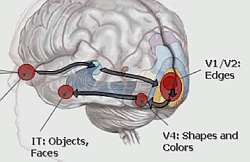
Now here comes Kendrick Kay and his buddies in Nature with "Identifying natural images from human brain activity", and if they haven't actually vindicated all those cheesy narrative gimmicks, they've made a damn good first pass at it. They used fMRI scans to infer which one of 120 possible novel images a subject was looking at. "Novel" is important: the system trained up front on a set of nearly 2,000 images to localize the receptive fields, but none of those were used in the actual mind-reading test. So we're not talking about simply recognizing a simple replay of a previously-recorded pattern here. Also, the images were natural— landscapes and still-lifes and snuff porn, none of this simplified star/circle/wavey-lines bullshit.

The system looked into the minds of its subjects, and figured out what they were looking at with accuracies ranging from 32% to 92%. While the lower end of that range may not look especially impressive, remember that random chance would yield an accuracy of 0.8%. These guys are on to something.

Of course, they're not there yet. The machine only had 120 pictures to choose from; tagging a card from a known deck is a lot easier than identifying an image you've never seen before. But Kay et al are already at work on that; they conclude "it may soon be possible to reconstruct a picture of a person’s visual experience from measurements of brain activity alone." And in a recent interview Kay went further, suggesting that a few decades down the road, we'll have machines that can read dreams.

He was good enough to mention that we might want to look into certain privacy issues before that happens...

Labels: ,